
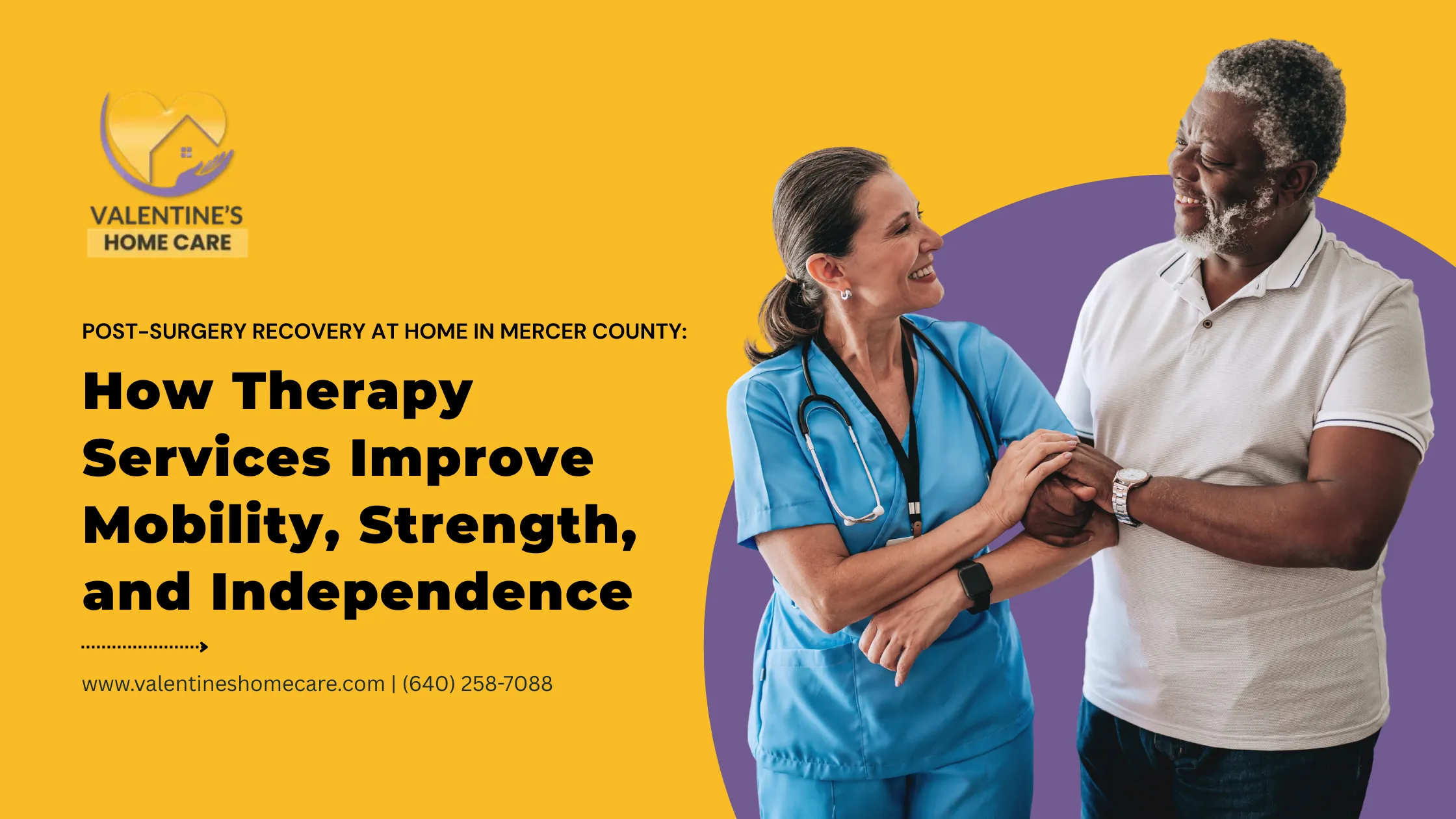
Post-surgery recovery at home is a gradual process that requires structure, guidance, and consistency. For patients in Mercer County, NJ, therapy services help transform limited movement into steady progress by aligning medical recovery goals with real-world home routines. This guide connects every stage of post-surgery recovery with the therapy services that support safer mobility, strength rebuilding, and long-term functional improvement.
When Recovery Shifts From Hospital To Home
Leaving the hospital marks a major turning point in recovery, but it also introduces new challenges. Daily movement, safety, and self-care now happen without constant clinical supervision. In Mercer County, structured in-home therapy supports this transition by continuing recovery plans in the everyday settings where activities occur.
- Home-based recovery setting: Encourages healing in familiar surroundings while practicing real-life movement patterns that match daily routines
- Local Mercer County delivery: Reduces missed sessions by removing transportation barriers that often delay recovery
- Care continuity: Maintains recovery progress between hospital discharge and independent living goals
This shift makes therapy services central to recovery success.
Therapy Services That Guide Post-Surgery Progress
Therapy services provide the framework that turns recovery goals into measurable improvement. Each service focuses on a different aspect of healing while supporting overall function. By combining physical, occupational, and speech therapy when needed, recovery remains balanced and responsive to changing needs.
- Physical therapy: Restores strength, balance, and walking ability through guided, progressive movement designed for post-surgery recovery
- Occupational therapy: Rebuilds the ability to manage daily activities such as bathing, dressing, and household tasks safely
- Speech therapy: Supports communication, swallowing, and cognitive recovery after neurological or related surgeries
These services explain why therapy plays a defining role after surgery.
Why Therapy Shapes Long-Term Recovery Outcomes
Recovery rarely improves through rest alone. Therapy services provide guidance, accountability, and a safe path of healing. Each therapy session builds on earlier gains, connecting short-term movement goals with long-term functional ability.
- Mobility support: Retrains safe movement patterns and reduces stiffness caused by inactivity after surgery
- Strength restoration: Reverses muscle weakness that develops during hospitalization and limited mobility
- Daily function rebuilding: Supports practical skills required for safe living at home without constant assistance
These benefits directly address common recovery difficulties.
Challenges Patients Commonly Face At Home
Many recovery challenges only appear after returning home. These obstacles can slow progress if not addressed early. Therapy services respond to these challenges as they arise, keeping recovery steady and controlled.
- Limited movement: Pain, swelling, or surgical restrictions reduce early mobility and confidence
- Daily task strain: Standing, dressing, or meal preparation may feel difficult without guided support
- Balance instability: Increased fall risk during early recovery stages can affect safety
Structured therapy targets these issues step by step.
How In-Home Therapy Follows A Structured Path
In-home therapy works through a clear process that adapts as recovery progresses. Each stage builds logically on the one before it. This structure connects clinical expertise with real-life recovery inside the home.
- Initial evaluation: Assesses strength, balance, and functional limitations related to surgery and home setup
- Personalized therapy planning: Aligns exercises with surgery type, home layout, and recovery goals
- Guided therapy sessions: Ensures correct technique and safe progression during recovery
- Progress monitoring: Adjusts therapy as mobility and strength improve over time
- Independence preparation: Helps patients maintain gains after therapy ends
Selecting the right therapy services strengthens this process.
Matching Therapy Services To Recovery Needs
No two recoveries are identical. Choosing appropriate therapy services ensures care remains effective at every stage. Many patients benefit from combining therapy types to support overlapping recovery goals.
- Physical therapy focus: Supports walking, balance, and joint mobility after orthopedic surgery
- Occupational therapy support: Helps regain independence with daily routines at home
- Speech therapy assistance: Addresses communication or swallowing challenges when required
Planning also includes cost considerations.
What Influences The Cost Of In-Home Therapy
Therapy costs vary based on recovery needs and service structure. Understanding these factors helps patients plan with greater confidence. Local providers help Mercer County residents understand available options.
- Therapy type: Physical, occupational, and speech therapy differ in scope and intensity
- Session frequency: More frequent visits may increase total cost depending on recovery needs
- Recovery duration: Longer healing periods require extended therapy support
- Coverage requirements: Insurance guidelines and referrals may apply
Preparation helps therapy begin smoothly.
Preparing Your Home And Documents For Therapy
Starting therapy at home requires basic preparation to ensure safety and effectiveness. These steps connect medical planning with daily living conditions. Clear preparation supports productive therapy sessions.
- Medical documentation: Physician referrals and discharge summaries guide care plans
- Home readiness: Clear, accessible space supports safe therapy activities
- Active participation: Consistent engagement improves recovery outcomes
Avoiding common mistakes further protects progress.
Habits That Can Slow Post-Surgery Progress
Certain behaviors can delay healing or increase risk if not addressed early. Therapy services help patients avoid these setbacks through structured guidance. Recognizing these habits helps maintain momentum in recovery.
- Missed sessions: Interrupts progress and limits strength gains over time
- Overexertion: Increases risk of injury or prolonged recovery if done too early
- Ignoring guidance: Reduces the effectiveness of therapy plans and recovery goals
Real recovery experiences highlight local adaptation.
Recovery Scenarios Inside Mercer County Homes
Recovery varies by surgery type and living conditions. Therapy services adapt to real homes rather than ideal settings. Local care ensures recovery plans fit daily life across Mercer County.
- Orthopedic recovery: Focuses on walking, balance, and joint strength at home
- Neurological recovery: Addresses coordination, speech, or cognitive challenges
- Limited-space homes: Adjust exercises to the available room and layout
Consistent habits reinforce these efforts.
Practices That Strengthen Recovery Results
Recovery improves when therapy is supported by daily routines. These practices reinforce professional care. They connect therapy sessions with long-term outcomes.
- Session consistency: Regular attendance supports steady improvement
- Exercise follow-through: Practicing assigned movements strengthens recovery gains
- Open communication: Sharing concerns helps therapists refine care plans
Local therapy access supports these practices.
In-Home Therapy Services Available In Mercer County
Local access to therapy services helps maintain coordinated, consistent recovery. In-home care reduces travel strain while maintaining professional oversight. Valentine’s Home Care provides in-home therapy services across Mercer County, NJ, supporting post-surgery recovery through coordinated care. Their verified local presence is available on the Valentine’s Home Care Google Business Profile. Related services supporting recovery include:
- Therapy services: Support mobility, strength, and functional recovery through structured care
- Home health aide services: Assist with daily activities alongside therapy support
- Service areas in Mercer County: Confirm local availability for in-home care
Frequently Asked Questions About Post-Surgery Therapy
Patients often want clear answers before starting therapy at home. The following questions address common concerns related to therapy services and recovery planning.
When should post-surgery therapy begin?
Therapy often begins soon after hospital discharge, depending on medical guidance. Early therapy reduces stiffness and supports safer movement. Providers offering post-surgery therapy services can help confirm appropriate timing.
Is in-home therapy effective for recovery?
In-home therapy is effective for many patients, especially those with mobility limitations. Therapy is adapted to the home environment to improve safety and consistency. Many patients combine therapy with home health aide services for daily support.
How long does post-surgery therapy usually last?
Therapy duration varies by surgery type and recovery progress. Some patients need short-term care, while others require longer support. Progress is reviewed regularly to adjust therapy plans.
Do therapy services require a doctor’s referral?
Many therapy services require a physician referral, particularly for insurance coverage. Discharge paperwork often includes therapy recommendations. Local providers can help verify referral requirements.
Get Personalized Post-Surgery Therapy Support From Valentine’s Home Care
Post-surgery recovery can feel uncertain without structured guidance. In-home therapy services help patients rebuild strength, restore mobility, and safely return to daily routines. Valentine’s Home Care supports patients across Mercer County, NJ, with physical, occupational, and speech therapy delivered at home. Their team designs care plans that fit real recovery needs and familiar environments.
📍 Address: Ewing Township, NJ 08618
📞 Call: (640) 258-7088 to discuss post-surgery therapy options
📧 Email: valentineshomecare@gmail.com
🌐 Explore: Valentine’s Home Care therapy services to learn more or request care